
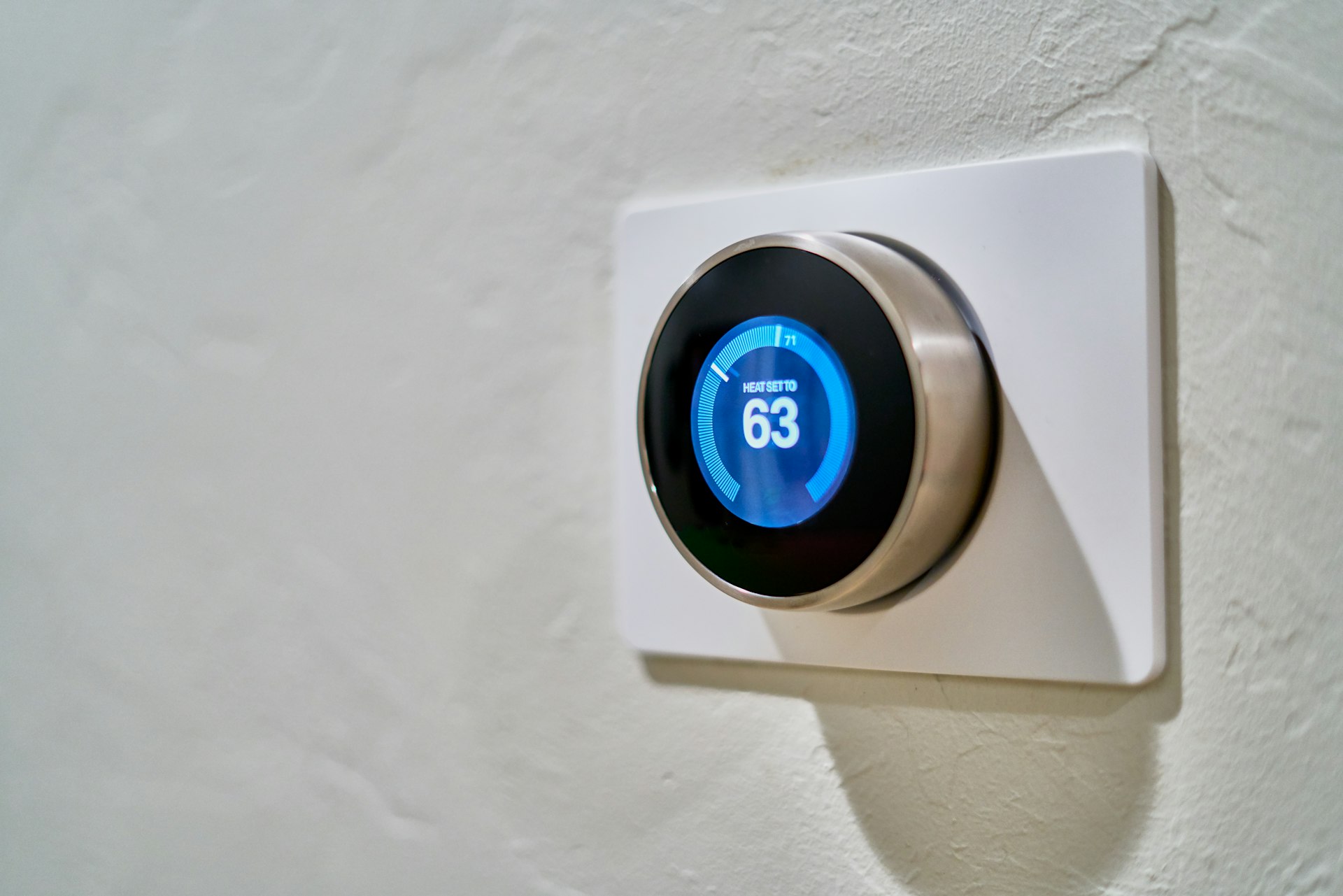
Why Denver's climate makes smart thermostats worth doing right
Front Range weather swings harder than almost anywhere in the country — a 70-degree afternoon in Golden can turn into a 20-degree evening within hours, and Denver's low humidity means furnaces run more often just to keep a house from feeling dry and cold. A single thermostat trying to average conditions across a two-story Highlands Ranch home or a rambling Castle Pines ranch almost never keeps every room comfortable, because south-facing rooms with big glass overheat in winter sun while north-facing bedrooms stay cold.
Zoning solves this by dividing the home into independently controlled areas, each with its own sensor and damper control tied back to the existing HVAC equipment. We map zones to how the house is actually used — primary suite, main living level, finished basement, bonus room over the garage — rather than by floor alone, since a bonus room over an unheated garage in a Parker or Castle Rock home often needs its own schedule entirely. Retrofitting zoning into an existing duct system is a coordinated job between us and an HVAC contractor, since it involves adding motorized dampers and a zone control panel rather than just swapping a thermostat.