
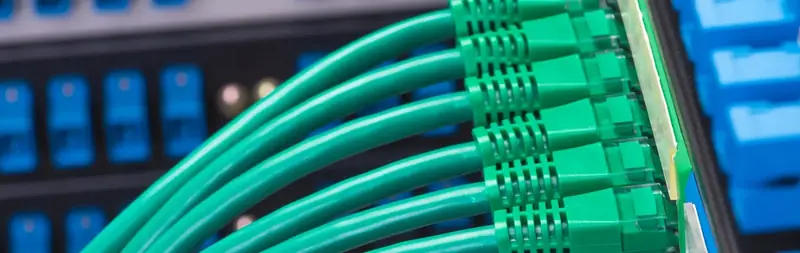
Retrofit low-voltage cable fishing and clean wire installation in a Highlands Ranch Denver home

Retrofit

New wiring. No torn-up home.

Already moved in? We specialize in retrofit wiring in Denver and clean cable fishing — running low-voltage wiring through finished walls, ceilings, and floors with the smallest possible access cuts.

Retrofit low-voltage cable fishing and clean wire installation in a Highlands Ranch Denver home

What's included with retrofit

  • In-wall and in-ceiling speaker installation in finished rooms
  • TV relocations and clean in-wall HDMI / power runs
  • Cat6 / fiber drops to home offices, media rooms, and APs
  • Camera, doorbell, and access control cable fishing
  • Smart shade, lighting, and thermostat low-voltage wiring
  • Drop cloths, dust containment, and protected floors on every job

Minimal access cuts

Strategic, small openings — never the holes you'd expect for a job this clean.

Whole-home capable

Two-story homes, finished basements, vaulted ceilings, brick — we've fished it all.

Spotless cleanup

We leave with your home cleaner than we found it — dust contained, floors protected.

Fishing cable through finished Denver homes without the mess

Retrofit work — adding wiring to a home that's already finished — is the majority of what we do, because most calls come from homeowners in established neighborhoods who want new technology in a house that was built or last renovated before it existed. The approach depends entirely on wall construction. Drywall over standard wood framing, common in mid-century ranches across Hilltop and Virginia Vale, is usually the easiest case: we use flexible fish rods and often a small access hole or two, hidden behind a future speaker grille or wall plate, to route cable inside the existing cavity.

Plaster and lath, common in pre-1950s homes across Wash Park, Congress Park, and Baker, is a different job entirely. The wire lath backing plaster is applied to makes fishing cable through the cavity harder and cutting an access hole riskier, since plaster cracks unpredictably around cut edges. We use smaller, more deliberate access points in these walls, patch with plaster-compatible compound rather than standard joint mud, and lean on attic and basement access to minimize how many holes we need to cut in visible wall surfaces at all.

Using existing paths before creating new ones

Before cutting anything, we look for existing chases — closets stacked between floors, HVAC returns, old phone or cable wiring conduit, and unfinished basement or attic space — that can carry new cable most of the way to its destination without opening a wall at all. A two-story home in Littleton or Centennial often has a closet-over-closet stack running from basement to attic that becomes a nearly invisible highway for new cable runs between floors.

When a wire genuinely can't be fished — a masonry wall with no cavity, or a finished ceiling with no attic access above it — we're upfront that wireless is the better answer rather than cutting a large, hard-to-repair access point for marginal benefit. Matching the right method to each specific run, rather than a blanket wired-only or wireless-only approach, is what keeps retrofit projects from turning into unnecessary drywall repair.

Patch quality and what to expect from an access cut

Every access hole we make gets patched before we leave, and we hold ourselves to a standard where the patch is ready for the homeowner's own touch-up paint rather than an obviously mismatched repair. On textured walls, common throughout Front Range homes built from the 1970s through 1990s, we match the texture as closely as hand tools allow; on smooth drywall or plaster, the patch is sanded flush and primed.

We also flag before starting whenever a full repaint of a wall or ceiling section will be needed to blend a patch seamlessly, since texture and paint sheen differences are sometimes visible under certain lighting even with a well-done patch — better to know that going in than be surprised afterward. Most single-room retrofit work involves only one or two small access points total, kept out of obvious sightlines wherever the cable path allows.

Frequently asked questions

Can you add wiring to a finished home without major damage?
Yes. Retrofit cable fishing is a core specialty. We pull Cat6, speaker wire, and HDMI through existing walls, ceilings, and floor cavities using small, strategically placed access points, then patch, texture, and paint so the wall matches.
How much does a retrofit AV install cost in Denver?
Single-room retrofits often run $900–$3,500. Whole-home retrofits with audio zones, network, and camera runs typically land between $6,000 and $30,000 depending on the home's construction and access.
Do you work in older Denver homes with plaster and lath?
Regularly — Wash Park bungalows, Congress Park Victorians, Hilltop and Country Club homes. Plaster, lath, brick, and balloon framing all take different technique, and we plan the access points before we cut anything.
Do you patch and paint the drywall yourselves?
Yes. Patching, texture matching, and paint are included in the quote on retrofit work. We don't hand you a wall with a hole in it.
What if a wire run truly isn't possible?
We tell you up front and design around it — surface raceway matched to the trim, a wireless zone amp, or a nearby relocation. No surprise change orders mid-project.

Background reading before you spec the system, plus the Denver suburbs where we install it most.

Guides worth reading first

Works well with

Where we install this

Get a free retrofit consultation in Denver.

Free in-home consultations across the Denver Metro Area.

Book a Free Consultation