
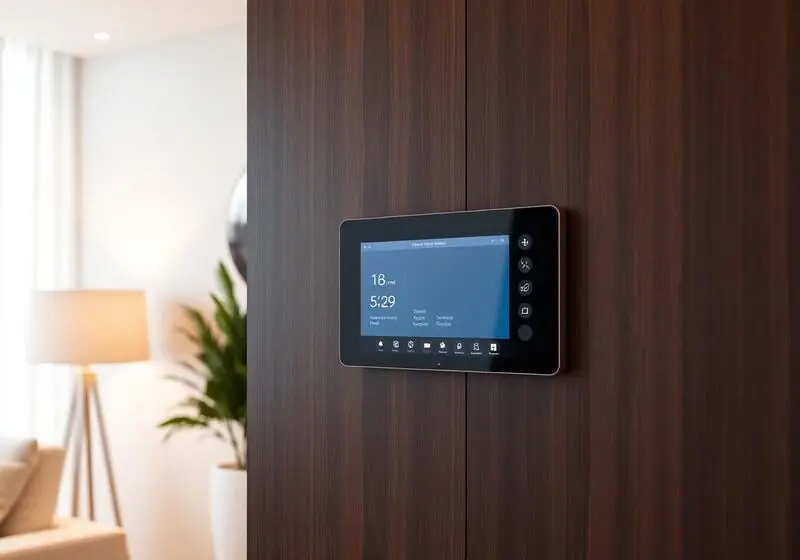
Unifying systems that were never designed to work together
Most homes accumulate smart devices one at a time — a video doorbell here, a smart thermostat there, a couple of smart plugs — and end up with a phone full of separate apps that don't talk to each other. Smart home automation replaces that patchwork with a single control layer that understands lighting, shades, climate, audio, video, security, and access as one system, whether the house is a new build in Castle Pines with everything speced from day one or an older Denver Square in Congress Park getting automated system by system over a few years as budget allows.
The platform we build on has to bridge a wide range of underlying hardware, since most homes end up with a mix of brands even when we're the ones speccing the system — a particular lock brand a homeowner prefers, an existing HVAC system, speakers chosen for a specific room. We favor systems with the broadest device compatibility precisely because Denver homes rarely arrive as a blank slate, and a platform that can't integrate what's already there forces expensive replacement instead of addition.