
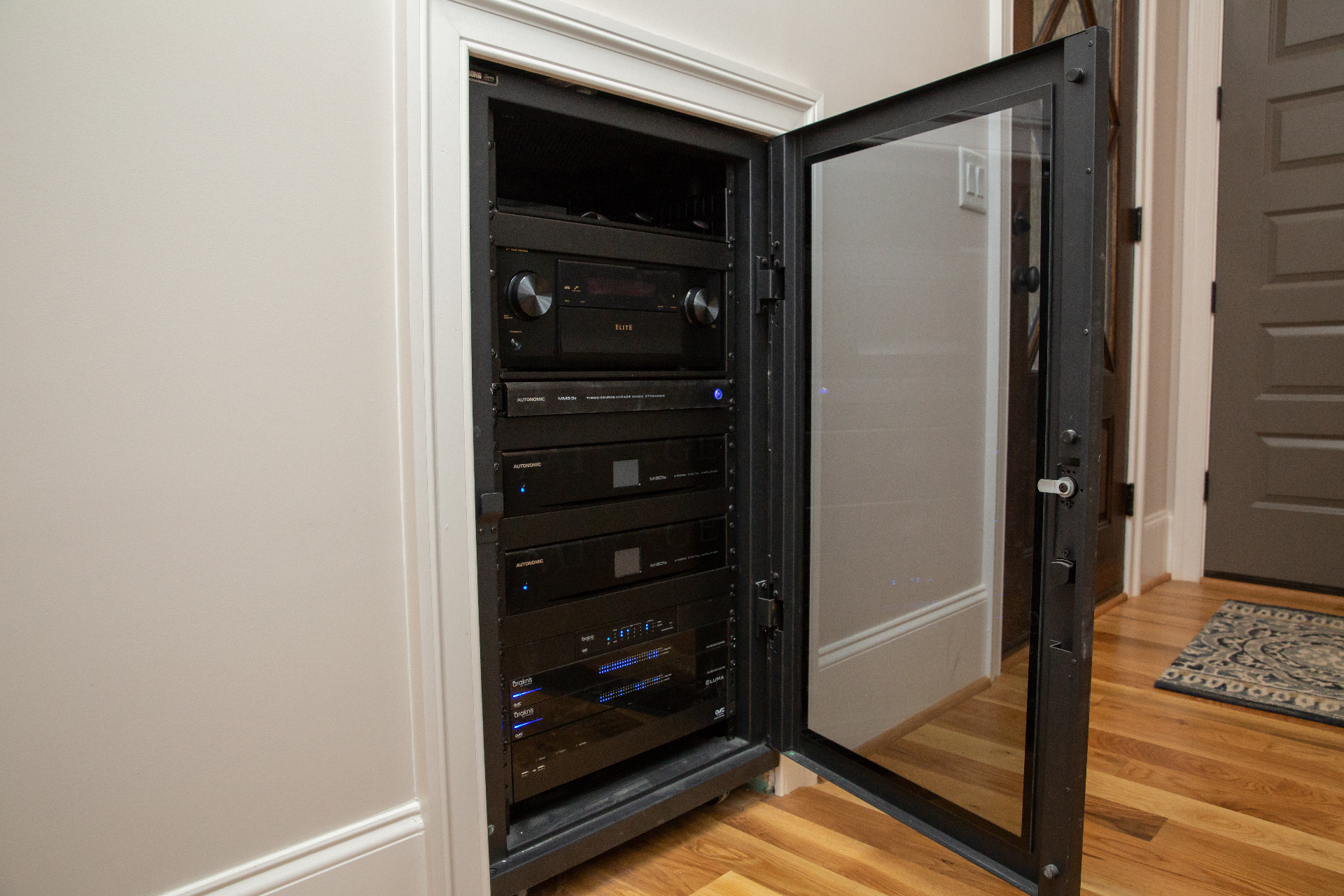
Professional network rack installation with managed switches and AV gear in a Denver smart home

Networking

Wi-Fi that just works.

Enterprise-grade home network installation in Denver with high-performance Wi-Fi installation, access points, structured cabling, and low-latency support for dozens of smart devices.

Professional network rack installation with managed switches and AV gear in a Denver smart home

What's included with networking

  • Certified installer of leading enterprise network platforms
  • High-performance access points with full-home heat-map survey
  • Multi-gig fiber and high-bandwidth structured cabling
  • VLAN segmentation for IoT, guest, and security devices
  • Managed switches, firewalls, and remote monitoring
  • Failover cellular backup for always-on connectivity

Whole-home coverage

Engineered with a heat-map survey — no dead zones, no roaming drops.

Built for IoT

Smart devices isolated on their own VLAN — secure, organized, fast.

Remote-supported

We see issues before you do and resolve most remotely in minutes.

Why a real network survey matters more in Denver's varied construction

Wi-Fi dead zones are almost always a construction problem before they're an equipment problem. Plaster-and-lath walls in older Denver neighborhoods like Platt Park and Baker contain wire mesh that badly attenuates wireless signal, meaning a router placed on one side of the house may barely reach a bedroom on the other. Stucco exteriors, common across Highlands Ranch and Castle Rock, use a metal lath base coat that can block signal trying to reach a detached garage or a patio speaker. Multi-story homes with a finished basement, main level, and upper floor in Littleton or Golden need access points on more than one level, since a single router — no matter how expensive — cannot physically reach every corner of a large multi-level house.

We run a heat-map survey before specifying anything, walking the property with measurement tools to see actual signal strength room by room, including outdoor areas if patio or pool coverage is part of the scope. This turns access point placement into a measured decision rather than a guess, and it usually reveals that the fix for a chronic dead zone is a wired access point in a specific hallway ceiling, not a stronger router.

Wired backbone, VLANs, and planning for growth

Wireless access points perform best when they're fed by a wired backbone rather than daisy-chained wirelessly off each other, so we run Cat6 (or fiber for longer runs, common between a main house and a detached structure in a Cherry Creek or Boulder property) to every access point location. This also gives the network room to grow — adding cameras, smart locks, or a home office setup later doesn't strain the wireless network because those devices land on dedicated wired or VLAN-segmented connections instead.

VLANs matter more now than they did even five years ago, since a typical smart home runs dozens of connected devices — thermostats, cameras, doorbells, smart plugs — many of which have weaker security than a laptop or phone. We put IoT devices on their own isolated network segment, guest Wi-Fi on another, and trusted household devices on a third, so a compromised smart device can't reach the rest of the network. For homes with a home office or remote-work setup, we also prioritize traffic so a video call doesn't stutter because someone else in the house is streaming 4K video.

Reliability for Colorado weather and remote monitoring

Front Range storms and occasional summer power flickers can knock out networking equipment that isn't properly protected, so we put routers, switches, and access points on surge protection and, for homes that need to stay connected no matter what, a cellular failover device that keeps essential services online if the main internet connection drops. This matters for households running security cameras or a home office that can't tolerate downtime.

Once a network is installed, most of our client interactions with it happen without a truck roll — our remote monitoring tools flag a failing access point or a device that's dropped offline, and in most cases we can diagnose and often resolve the issue before anyone in the house even notices there's a problem.

Trusted brands

Networking — brands we install.

Frequently asked questions

How much does a home network installation cost in Denver?
A managed network with a router, switch, and two or three Wi-Fi access points typically runs $2,500–$6,000 installed. Larger Denver homes with structured Cat6, a full rack, and exterior coverage generally land between $6,000 and $20,000.
Why is my Wi-Fi slow even with fast internet?
Almost always coverage and channel congestion rather than bandwidth. A single consumer router can't cover a 4,000+ square foot Denver home with plaster or brick interior walls. Properly placed, hardwired access points on a managed network fix it far more reliably than a faster internet plan.
Mesh Wi-Fi or hardwired access points — which is better?
Hardwired access points, every time, when we can run cable. Mesh nodes repeat wirelessly and lose roughly half the throughput per hop. We use mesh only in retrofits where a wire genuinely can't be pulled.
Do you run Cat6 and fiber in existing homes?
Yes. We fish Cat6 and fiber through finished walls and ceilings daily, patch and paint behind ourselves, and terminate everything in a labeled rack or enclosure.
Can you set up VLANs and a separate guest network?
Yes. We segment smart-home devices, cameras, work laptops, and guests onto separate VLANs so a compromised device or a bandwidth-hungry guest can't reach or slow the rest of the house.
Do you monitor the network after install?
We offer remote monitoring on the systems we install, so we usually see an ISP outage, an offline access point, or a failing switch before you call us.

Background reading before you spec the system, plus the Denver suburbs where we install it most.

Guides worth reading first

Works well with

Where we install this

Get a free networking consultation in Denver.

Free in-home consultations across the Denver Metro Area.

Book a Free Consultation