Motorized shades Denver

Motorized shades that follow the Denver sun.

Denver's trusted installer for motorized shades and automated window treatments. Whisper-quiet roller, roman, drapery, and blackout shades that track the Front Range sun, cut glare on south- and west-facing glass, protect hardwood and art from UV, and frame the Rocky Mountain view.

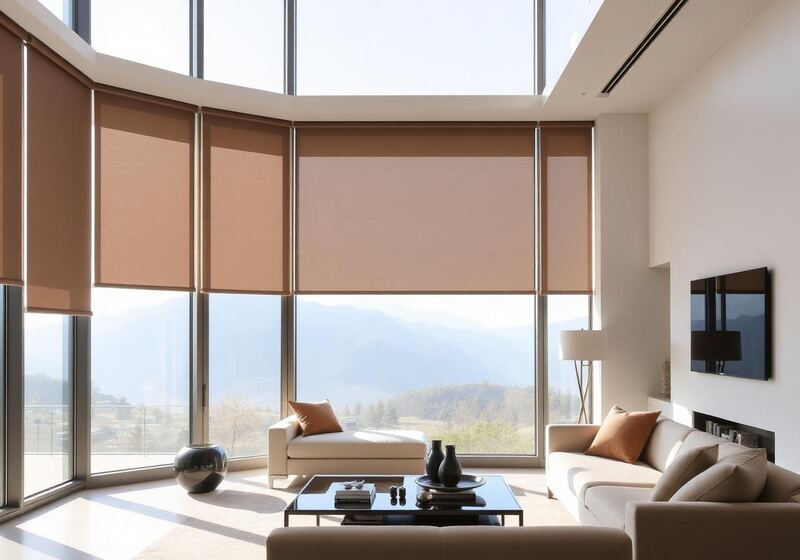
Motorized roller shades and smart window treatments installed in a Greenwood Village Denver home

What's included with motorized shades denver

  • Premium motorized roller, roman, drapery, and cellular shades
  • Astronomical timeclock — shades follow the Denver sun automatically
  • Glare and heat-gain control for south and west Front Range exposures
  • Wired and battery-powered options for retrofits
  • Hundreds of fabrics, sheers, and blackouts in stock
  • Integrated with lighting, climate, and automation scenes
  • Certified installers for all major motorized shading brands
  • Whole-home Denver motorized shading design & install

Sun-tracking

Shades adjust automatically as the Front Range sun moves across the sky.

Protect interiors

Block UV before it fades hardwood, art, and upholstery.

Whisper quiet

Near-silent precision motors — even in the bedroom.

Why motorized shading pays off on Denver's sun exposure

Denver's roughly 300 annual sunny days are a selling point for living here and a real design challenge for anyone with large south- or west-facing windows, which are common in the open floor plans and big glass walls typical of newer builds across Highlands Ranch, Castle Rock, and Lone Tree. Direct sun through unshaded glass fades hardwood floors and furniture, overheats rooms even in winter when the sun angle is low, and forces air conditioning to work harder in summer afternoons. Automated shades that track the sun and lower during peak solar gain address all of this without anyone having to remember to close them by hand every afternoon.

Older homes present a different case: a Wash Park bungalow or a Hilltop brick two-story often has smaller, individually-sized windows rather than large glass walls, so the value of automation shifts more toward convenience and light control — waking to shades that open on a schedule, or closing them from bed at night — than dramatic energy savings, though there's still some benefit on whatever south-facing exposure the home has.

Choosing hardwired versus battery shades for the right home

New construction and full remodels across Parker and Castle Pines are the easiest case for hardwired shading, since we can run low-voltage wire to each window during framing, giving the homeowner silent, precision motors with no batteries to think about for the life of the system. This is the setup we recommend whenever the construction schedule allows for it.

Retrofit projects in already-finished homes across Littleton, Lakewood, and Golden more often call for rechargeable battery-powered shades, since running new wire to every window in a finished home means opening walls we'd rather avoid disturbing unnecessarily. Battery shades from quality manufacturers last several years per charge and perform nearly identically to hardwired units in daily use, making them the practical choice for most retrofit shading projects.

Measuring, fabric selection, and the install timeline

Motorized shades depend on precise window measurements, since even small errors show up as visible gaps or binding fabric once installed. We measure every window in scope during the design visit and discuss fabric openness — how much light and outside visibility passes through — room by room, since a home office wants a different fabric than a media room wanting near-total blackout.

Because fabric and motors are typically special-ordered per project, there's a lead time of several weeks between design approval and the shades arriving, which we walk clients through up front so it's factored into any broader remodel or build timeline. Install itself is usually completed in a day or two, followed by a return visit after the household has lived with the automation for a week or so, to fine-tune schedules against actual sun exposure through the seasons.

Transparent pricing

Starting at $450 per shade installed

Most Denver whole-home motorized shading projects run $8,000–$40,000+ depending on fabric, motor, and window count.

Get an exact quote

Frequently asked questions

How much do motorized shades cost in Denver?
Installed motorized shades in Denver typically start around $450 per window for battery-powered roller shades with a quality light-filtering fabric, and $700–$1,800+ per window for hardwired Lutron Sivoia QS, drapery, or dual roller (sheer + blackout) systems. Whole-home projects most often land between $8,000 and $40,000, with luxury Cherry Creek, Castle Pines, and Polo Club estates ranging higher. Every Apex AV Denver quote is fixed-bid before install.
Do motorized shades work with smart home systems?
Yes. Every motorized shading system we install in Denver integrates with all major whole-home automation platforms, voice assistants, Alexa, Google Home, and Apple Home. Shades trigger from the same keypads and apps that already run your lights, theater, and climate.
Battery-powered or hardwired motorized shades — which is right for my Denver home?
For new construction and remodels we spec hardwired shades whenever possible — silent precision motors, no batteries to change, and reliable operation for 20+ years. For retrofit projects in existing Denver homes where opening walls isn't practical, we install rechargeable battery-powered shades from leading manufacturers that last 3–5 years per charge.
Can motorized shades really cut cooling costs on Denver's south and west windows?
Yes — this is one of the biggest wins in Denver. Automated shades on southern and western exposures track the sun and lower automatically during peak solar gain, typically cutting HVAC load 10–25% in summer while still letting light in during shoulder hours. We wire this into your thermostat scenes so the house cools itself before you get home.
How long does a Denver motorized shades install take?
Measurement and design take about one week. Fabric and motor lead times are typically 3–6 weeks depending on brand. On-install day, our Denver team can hang and program a whole-home shading system in 1–2 days, then return for final calibration once you've lived with the automation for a week.
Which neighborhoods do you install motorized shades in?
We install motorized shades across the Denver Metro and Front Range — Cherry Creek, Hilltop, Polo Club, Greenwood Village, Cherry Hills Village, Castle Pines, Castle Rock, Highlands Ranch, Lone Tree, Parker, Littleton, Centennial, Bow Mar, Evergreen, and Boulder.

Background reading before you spec the system, plus the Denver suburbs where we install it most.

Guides worth reading first

Works well with

Where we install this

Get a free motorized shades denver consultation in Denver.

Free in-home consultations across the Denver Metro Area.

Book a Free Consultation