
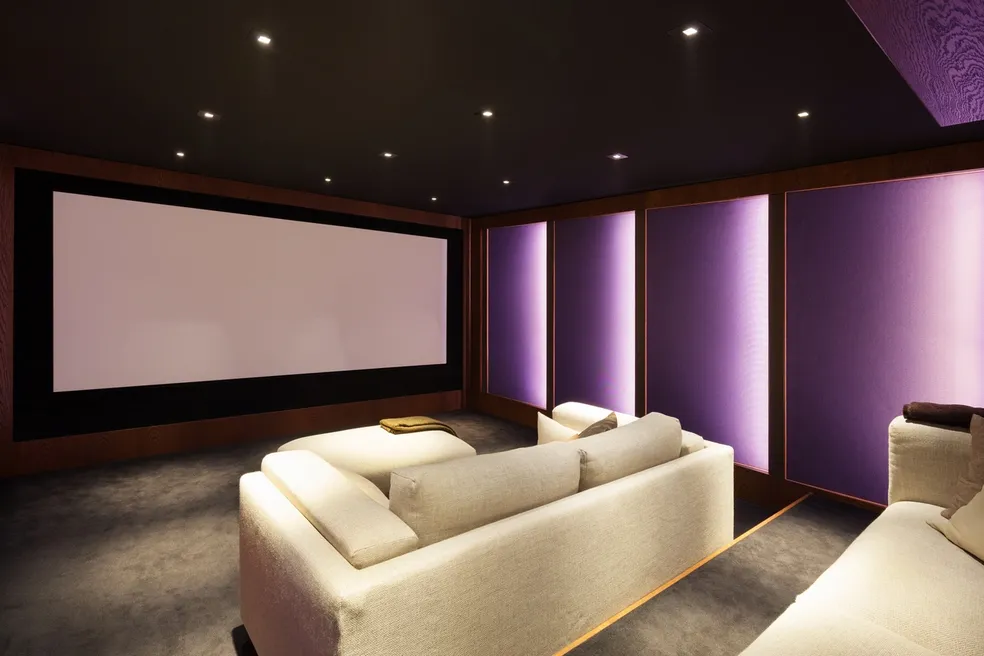
Dolby Atmos starts with speaker geometry, not a speaker count
Dolby Atmos adds a height layer to the traditional surround field, allowing a soundtrack to place sound above the listener as well as around the room. That only works when the speaker layout is designed around the real seating positions. We measure the room, screen wall, ceiling height, row locations, and sightlines before choosing between a 5.1.2, 5.1.4, 7.1.4, or larger layout. The numbers describe ear-level speakers, subwoofers, and overhead channels; they are a starting point rather than a guarantee of good sound.
Placement matters more than simply adding channels. Overhead speakers need useful separation from the front and rear bed-layer speakers, surrounds need clear coverage across every seat, and the center channel needs to keep dialogue anchored to the screen. In a dedicated Denver theater, those locations can be coordinated with acoustic treatments and a fabric wall system. In an open media room, we work around lighting, HVAC registers, ceiling joists, and the way the room connects to the rest of the home.